

27 January 2026
The Telegraph
Interviews


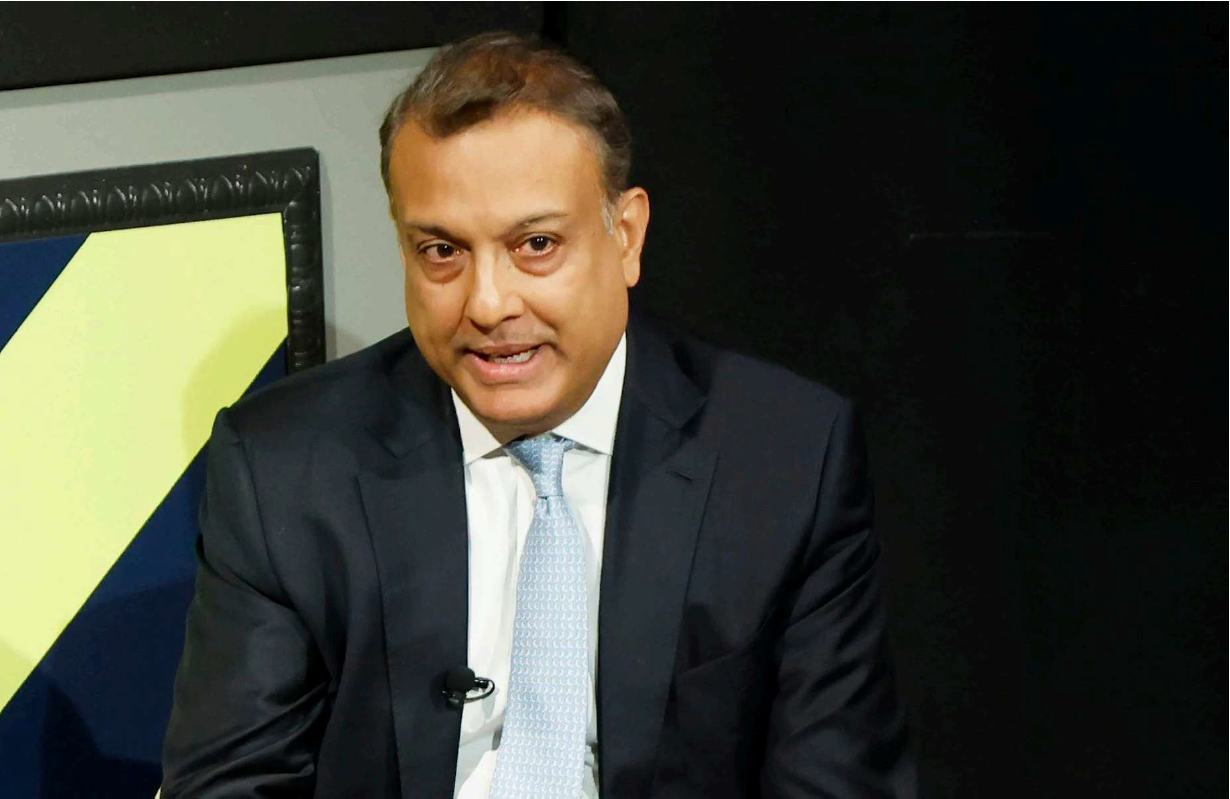
Britain and Europe should stop relying on China by turning
to India to meet their net zero targets, an energy giant boss has said.
Sumant Sinha, the founder and chief executive of ReNew, one of India’s biggest green energy companies, urged Sir Keir Starmer to diversify as he prepares to travel to China, which dominates production of goods such as solar panels and wind turbines.
He said: “China has a lock on the entire clean-energy supply chain.
“The Indian government said that for strategic reasons, for independence reasons, it is better for us to develop our own supply chain. I wish the rest of the world would go down that path, too.
“If you want to buy the cheapest equipment, then you’re going to keep buying from China. But if you want diversification, you should at least have two places in the world that are of scale from where you can import, rather than just have one place.”
The government of Narendra Modi, the prime minister of India, wants to build a domestic supply chain for wind turbines and solar panels. It is using hefty tariffs and buy-local rules to keep out cheap Chinese competition.
ReNew, which was originally a power generation company, has responded by developing in-house capacity to make solar panels and cells.
Mr Sinha estimated that within a decade, India would have a domestic supply chain covering polysilicon, wafers, cells and panels – all areas where China’s global market share is now at 70pc or more.
He said India’s output was unlikely to be price-competitive with China’s because the Chinese had subsidies, scale and a research edge.
“And the Chinese also have a tendency, if they feel that somebody is coming up as a potential competitor, to just go into that market, start dumping and drive out all competition.”
But if Indians had to pay 15pc or 20pc more to end dependency on China, “that is a price worth paying”, he added.
The Starmer Government’s net-zero push depends critically on China. As Britain rolls out more solar farms, two thirds of the imported panels come from China.
Almost all panels, regardless of origin, involve Chinese-made materials such as polysilicon.
Mr Sinha said he had been talking to companies in the European Union about setting up a supply chain with India, but their priority was to source their supplies from within the bloc.
“That’s just going to be a lot more expensive, and nobody’s going to do it unless they get a high degree of clarity on what kind of protection they’re going to get in the future,” he said.
ReNew’s chief executive added: “Nobody is willing to give that. So it’s very hard for anybody to set up manufacturing in those countries. The next best option for these guys is to import a certain amount, at least, from India.
“The only caveat is that other countries have to want to have diversification, and they have to be ready to pay a little bit extra for it.”
India’s protectionism has attracted controversy. Beijing has threatened to lodge a complaint at the World Trade Organisation. Internal critics say the tariffs are creating inefficient industries and higher prices in India.
Mr Sinha said this would change as India developed indigenous skill-base and research capacities.
“Keep in mind that our industry is still very new. It’s
very nascent. At some point, we’ll get closer to the Chinese in pricing.”
Ursula von der Leyen, the president of the European Commission, is in India this week discussing a free-trade deal. The two sides have had a “clean energy and climate partnership” since 2016, which includes discussions on jointly developing tech capabilities.
Britain last year created a joint “offshore wind task force” with India, which includes measures to strengthen India’s domestic manufacturing capacity for components such as blades and turbines.
The UK-India free trade deal, signed last June, is meant to
encourage cross-border collaboration in technology such as solar cells,
batteries and grid connections.
