

.webp)
At ReNew, we are committed to responsible water management, aiming to minimise environmental impact while supporting long-term sustainability. We actively optimise water usage across our operations by integrating advanced technologies that improve efficiency and support conservation.
Our target: Become water-positive by 2030.
In the past four financial years, we have not experienced any water-related incidents such as operational interruptions or plant closures that resulted in any material financial impacts.


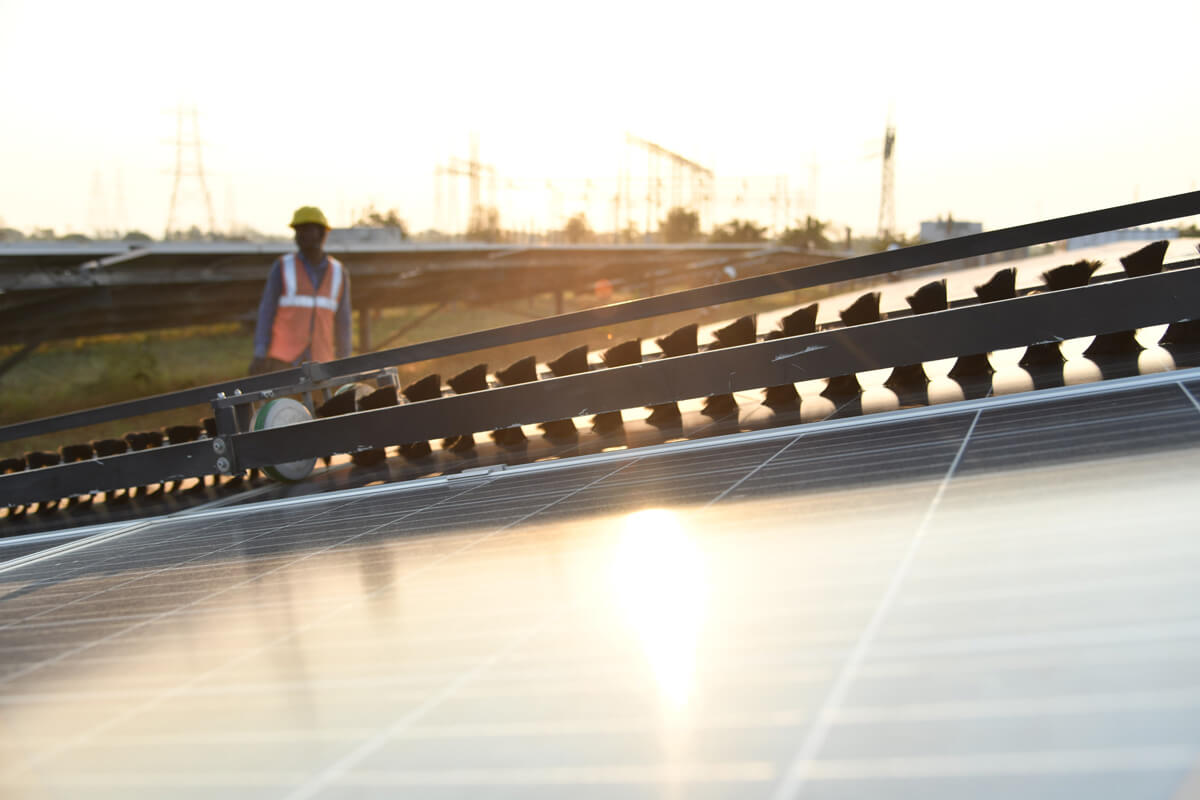
We transitioned from water-based to dry robotic cleaning of solar panels.
 Coverage expanded across 55.5% more sites in FY 2025-26
564,239 m3 of water saved in FY 2025-26
29.4% increase in annual water savings
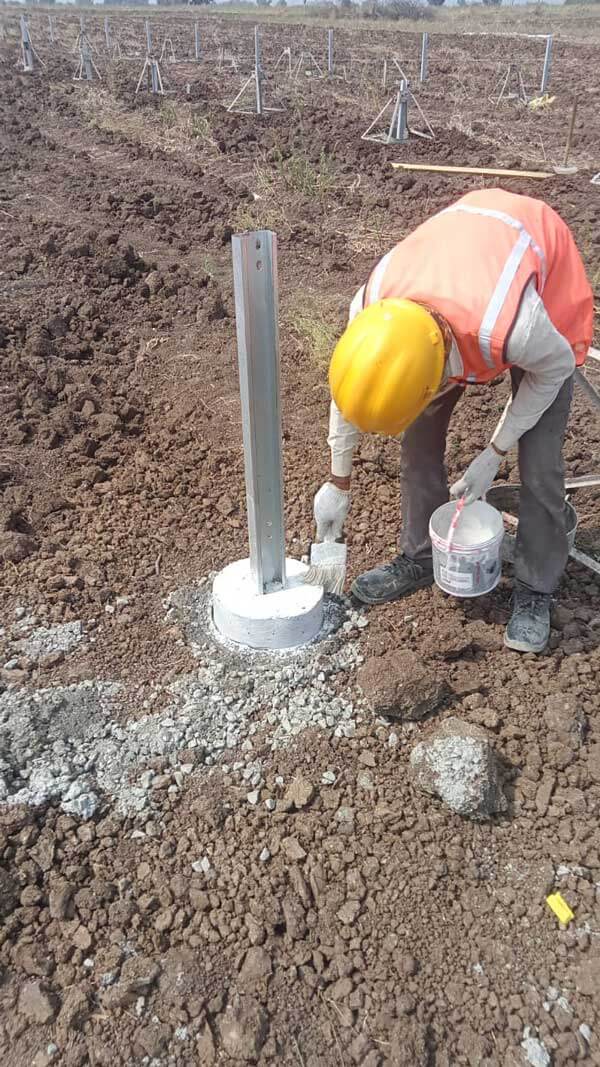
To reduce water in concrete curing, we use curing compounds that retain moisture without additional water.
Successfully piloted in FY 2022-23
Achieved 59% water reduction compared to conventional curing.
Rolled out at 8 sites in FY 2024-25
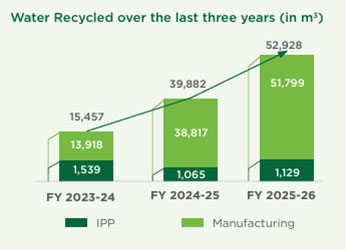
We are moving toward Zero Liquid Discharge through MBBR-based STPs across key locations.
100% reuse of treated water for gardening, cleaning, and sanitation
No external discharge
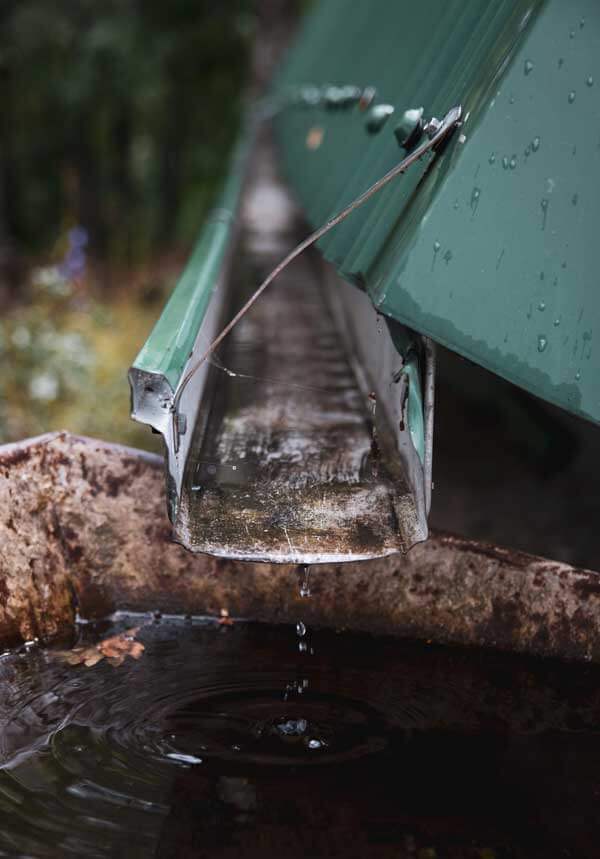
101,757 m3 of rainwater harvested across 8 Solar EPC and Wind Asset Management sites
15,000 m³ harvested in FY 2024–25 across 2 sites.
Smart backwash control: 87.5% reduction
Saving ~24,800 m³ annually.
Low-flow fixtures and mist aerators: ~4,790 m³ saved annually.

ReNew has set a long-term target of becoming Water Positive by 2030. For FY 2024–25, the annual target was defined as achieving a 20% increase in water savings over FY 2023–24. In FY 2023–24, water savings of 358,746 m³ were achieved primarily through robotic cleaning initiatives. In FY 2024–25, with the addition of further water stewardship initiatives, ReNew achieved savings of 540,372 m³, representing a 51% increase over the previous year and exceeding the annual target.
.png)
As part of our commitment to achieve water positivity by 2030, we have established dedicated water reduction targets for our operations. For the IPP business, a target was set to achieve a 10% absolute reduction in water consumption, equivalent to 295,164 m³, while the Manufacturing business targeted a 2% reduction in water consumption intensity per MW from the FY 2024-25 baseline. Collectively, these commitments translated into a consolidated water consumption target of 1,045,833 m3 overall. We surpassed this target by 4%, recording total water consumption of 1,007,564 m3 in FY 2025-26.
For FY 2025-26, ReNew established an annual target of 949620 m3 for total net freshwater consumption in water-stressed areas. Actual consumption was 914871 m3, remaining within the target.
We continue to monitor water consumption and implement measures to improve water-use efficiency across our operations. This demonstrated continued progress in mitigating water-related risks, improving operational water efficiency, and strong water stewardship in areas facing higher water stress.
.webp)
.webp)